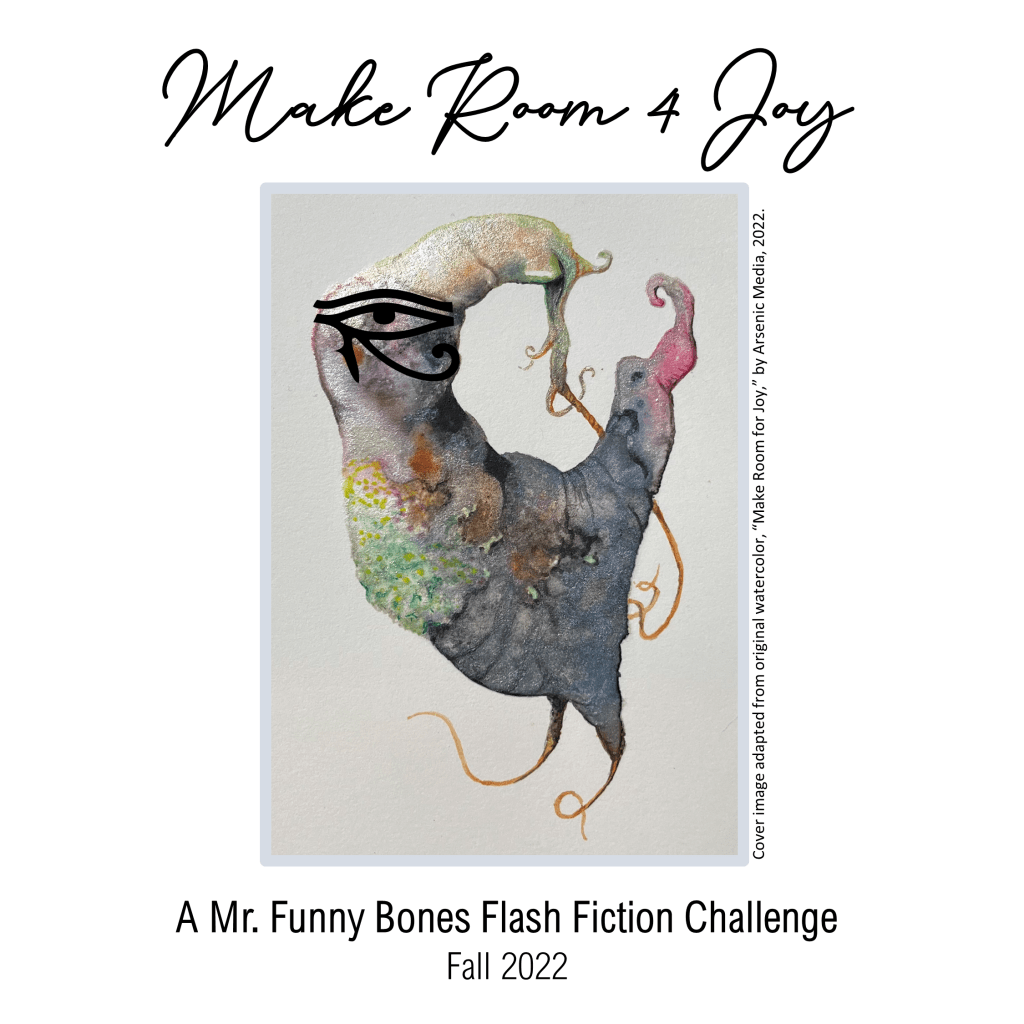
Make Room 4 Joy: The AI-Enhanced Spring Flowery Edition

We’re putting OpenAI’s ChatGPT to the test with Make Room 4 Joy.

We asked ChatGPT to produce more flowery versions of the titles and the text of each chapter of Make Room 4 Joy. We made it easier on ChatGPT by removing the character limits.

In some instances, ChatGPT did pretty good. In others, it was no match for the brilliantly imaginative mind of the genius behind Make Room 4 Joy: A Mr. Funny Bones Flash Fiction Challenge and the entire Mr. Funny Bones global franchise.

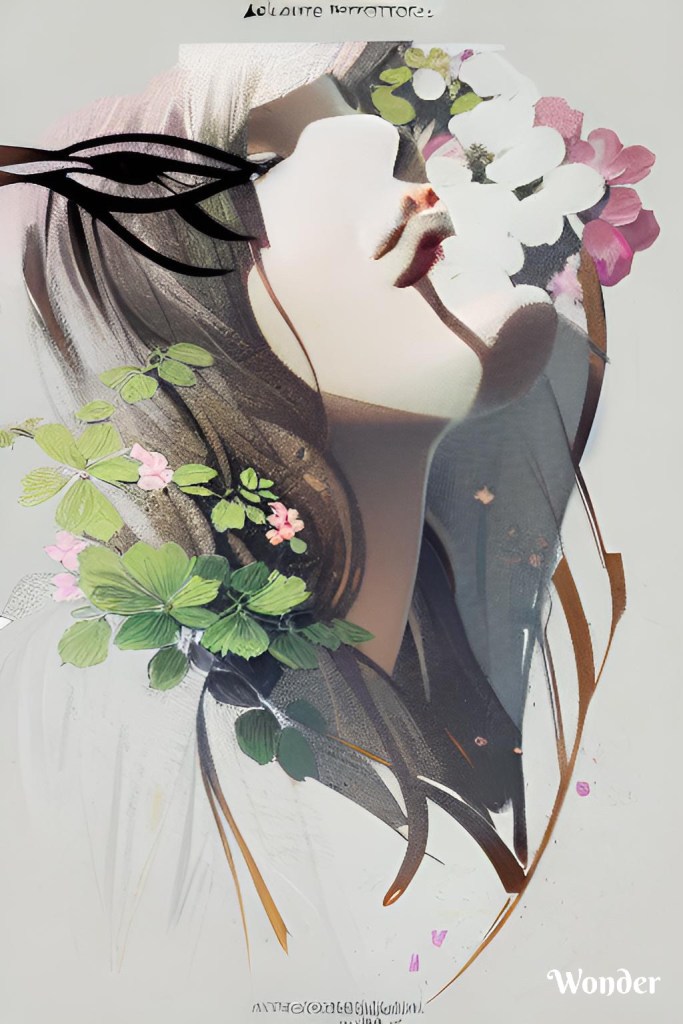
We used Wonder-AI for the images.

Enjoy Man versus Machine over the next several days!
Chefs-d’œuvre de la chanson populaire des faux amis, n. 5

Une Taupe Qu’on Se Moquait (A Mole That Was Made Fun of)

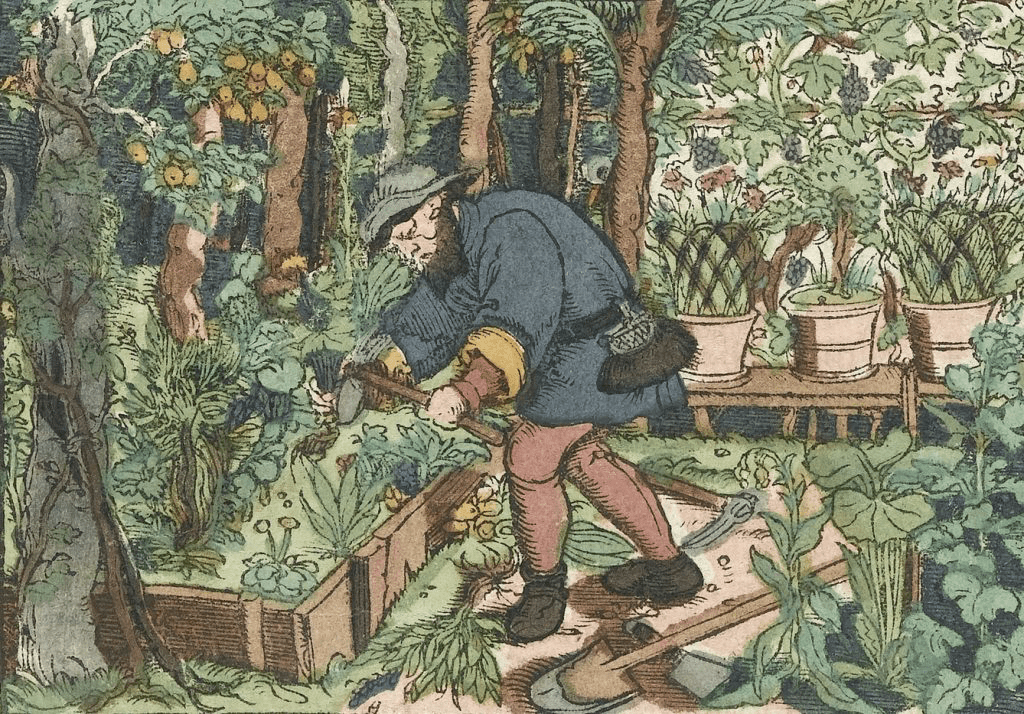
Editor’s Note: Poorly translated in the late seventeenth century from Old French, the surviving lines of Une Taupe Qu’on Se Moquait (literally, A Mole That Was Made Fun Of) recount what ethnomusicologists today agree are hallucinations triggered by the ingestion of a variety of wild mushroom once widely cultivated in monastic gardens across Europe during the Late Middle Ages. The mole covering its water and a bone killing the protagonist are little-known leitmotifs of the troubadour song tradition of which little evidence survives. The downpour associated with the court pond at Sceaux is a later addition to the song and in all likelihood a reference to the Château de Sceaux‘s vast formal gardens and reflecting pools designed by the French landscape architect, André Le Nôtre. Some ethnomusicologists have suggested–not without controversy–that the melody of Une Taupe Qu’on Se Moquait inspired the American folk song, On Top of Old Smoky.

Une taupe qu’on se moquait a couvert son eau,
Aie! L’os m’a tu, l’averse d’un cour’tang de Sceaux.

Chefs-d’œuvre de la chanson populaire des faux amis, n. 4

Au Tripot (To the Gambling Den)

Editor’s Note: Regularly heard in bars and gambling parlors throughout southern Belgium since the introduction of soccer to Europe in the mid-19th-century, the drinking song Au Tripot celebrates the Walloon penchant for betting on sports games, drinking too much, and ending up in the gutter. In 1939, the American songwriters George Harold Sanders and Clarence Z. Kelley borrowed the melody from Au Tripot for their novelty hit, I’m a Little Teapot.

J’aime aller au tripot
Pour le foot.
Voici mon pari.
Ouiah, juste une goutte!
Après l’avoir tout bu…
Alors! Zut!
Ivre de mon cul et dans la goutt’e!

James Ensor, Les Pochards, 1883 Photo: https://www.flickr.com/photos/mazanto/44548604840/

Chefs-d’œuvre de la chanson populaire des faux amis, n. 3

Ghislaine

Editor’s Note: Said to have originated in the snowy Alps surrounding the French city of Grenoble in the nineteenth century, this popular campfire song pays tribute to Ghislaine, an Alpine demoiselle who loved the outdoors and the natural beauty of the Dauphiné, especially during the off season when all the ski resorts were closed. In 1940, the American singer-songwriter, Woody Guthrie, would borrow the melody from Ghislaine for his famous folk song, This Land Is Your Land.

Ghislaine aime marcher, Ghislaine aime grimper
Au bord de la rivière et dans la forêt,
Du bas d’une montagne jusqu’au chalet au sommet.
Ghislaine adore la vue du pic!

Chefs-d’œuvre de la chanson populaire des faux amis, n. 2

Eaux des Dieux d’Audaye (Waters of the Gods of Audaye)

Editor’s Note: French peasants used to sing this merry song whilst harvesting hay in the shadows of the walls of the cathedral city of Chartres. The song commemorates Audaye, a village in the Beauce region of western France where, legend has it, the water from the village spring turned entire hayfields into gold. Hence, the title of the song: “Waters of the Gods of Audaye.” Around 1850, the Baltimore songwriter Stephen Foster would borrow the melody from Eaux des Dieux D’Audaye for the minstrel song, Camptown Races.

Paysans viennent ici de loin,
Dieux d’Au! Dieux d’Au!
Pour de l’eau d’arrose’ leur foin,
Eaux des dieux d’Audaye!

Remplis vite les seaux!
Verse-les sur les champs!

Attends que le foin se transforme en or,
Eaux des dieux d’Audaye!

Noon - Rest from Work (after Millet), 1890 by Vincent Van Gogh
Noon – Rest from Work (after Millet), 1890 by Vincent Van Gogh. Courtesy of http://www.VincentVanGogh.org

Chefs-d’œuvre de la chanson populaire des faux amis, n. 1

Anaïs Donne un GIF au Phoque (Anais Gives a GIF to the Seal)

Editor’s Note: A popular street song from the Paris suburbs, “Anaïs Donne un GIF au Phoque” uses call and response to lay out four trials faced by the song’s protagonist over the course of a single day and his same reaction to each of them. The meaning of the song’s cryptic response (“Anais gives a GIF to the seal!”) remains open to interpretation.

Ma belle m’a quitté pour un type!
Anaïs donne un GIF au phoque!

Mon chef se plaint de mon équipe!
Anaïs donne un GIF au phoque!

Pour ma fête tu me donnes la grippe?!
Anaïs donne un GIF au phoque!

Mon oncle veut me faire une pipe!
Anaïs donne un GIF au phoque!

Your Mr. Funny Bones Library

Blind Allie: A Mr. Funny Bones Comitragedy

Dead on a Rival: The Case of the Crock-Pot Killer: A Mr. Funny Bones Mystery

Little Hope: A Minor Tragedy: A Mr. Funny Bones Long Short Story

Make Room 4 Joy: A Mr. Funny Bones Flash Fiction Challenge

Mr. Funny Bones 2021 Holiday Quiz

Mr. Funny Bones Back to Skull

Mr. Funny Bones on the Attack!

Missy Impossible: A Mr. Funny Bones Thriller

Pandemonium: A Mr. Funny Bones Days of Our Past Lives COVID-19 Reunion

The Return of the Screwball: A Mr. Funny Bones Gothic Novelty (with AI Boost)

Other Titles

Into the Vulgate

Une Parodie des Artistes, 22 avril 1988